Application Control
Allowlisting vs Blocklisting
Two Approaches. One Goal: Reduce Execution Risk.
Allowlisting and blocklisting are two common approaches to application control. Allowlisting uses a default-deny model where only approved applications can run, while blocklisting allows applications by default but restricts tools and techniques known to be abused by attackers in real-world breaches. Both can reduce risk. The right choice depends on your environment, operational capacity, and security goals.
Allowlisting: Default-Deny Application Control
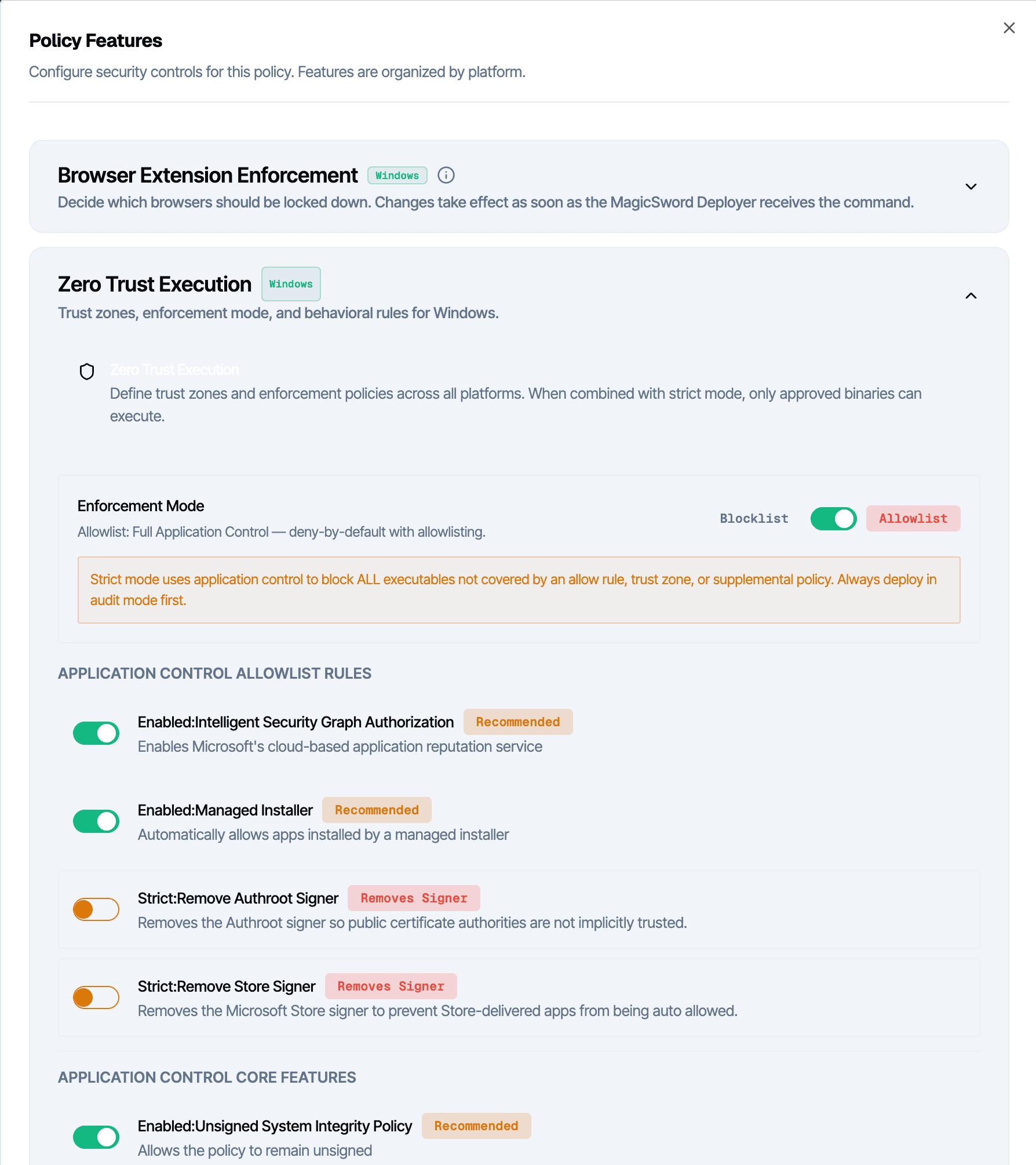
Allowlisting is an application control model that uses a default-deny approach: all applications are blocked from running unless explicitly approved. Organizations gradually build allowlists by permitting software that is verified as legitimate for their environment.
This approach provides strong control and minimizes unknown software execution. However, it can require significant policy tuning, exception handling, and ongoing maintenance — especially in dynamic enterprise environments where tools and workflows frequently change.
Characteristics
- →Default-deny: everything blocked unless explicitly approved
- →Strong baseline control over software execution
- →Requires continuous policy tuning and exception management
- →Operationally intensive in dynamic environments
Blocklisting: Threat-Driven Control
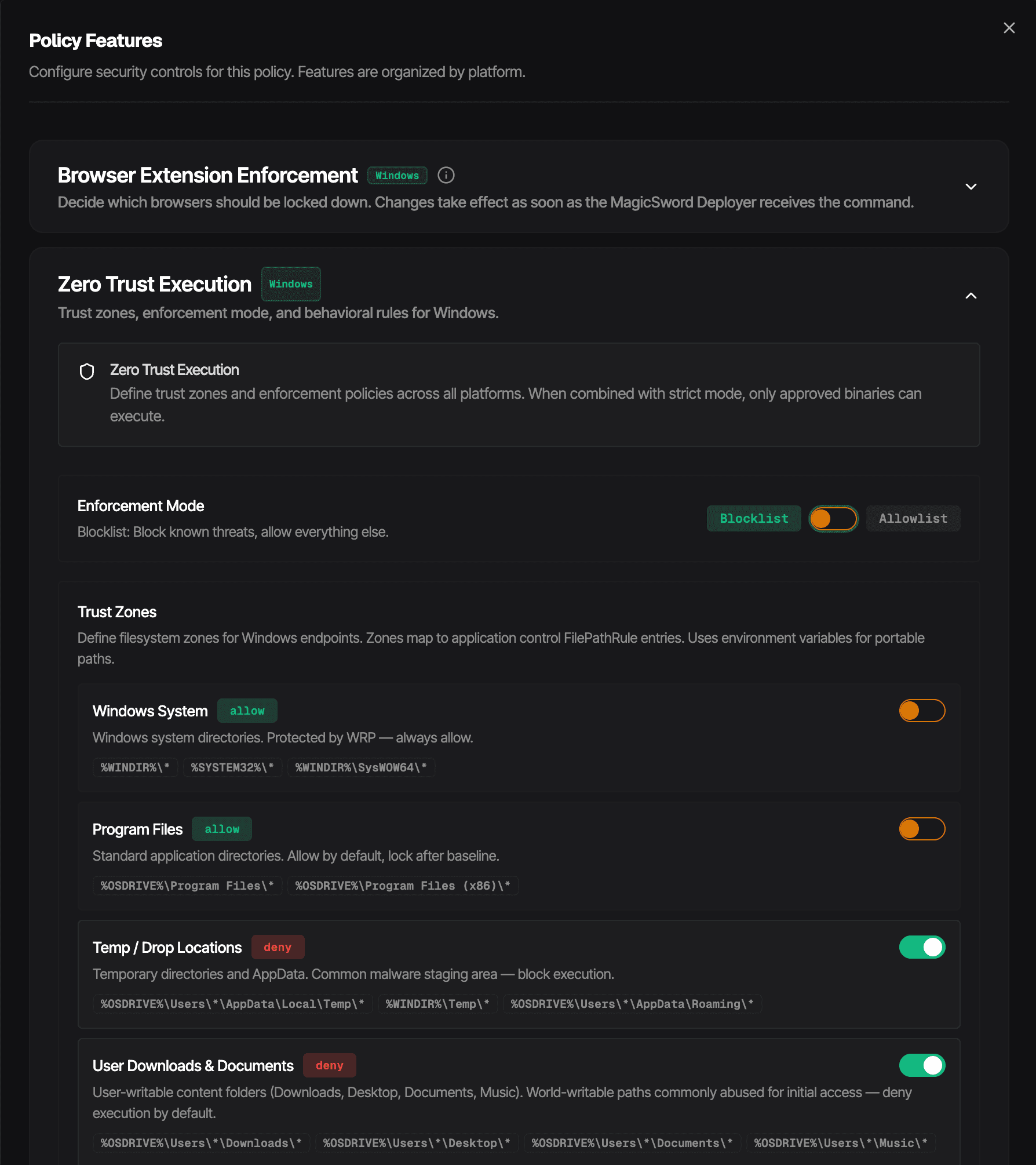
Blocklisting allows applications to run by default, but restricts only specific tools, binaries, or drivers known to be abused by attackers.
Modern threats increasingly rely on legitimate tools — PowerShell, WMI, remote management software, and signed drivers — rather than custom malware. A threat-driven blocklisting strategy focuses on restricting the techniques and execution paths most commonly seen in real-world breaches.
This approach can reduce operational friction while targeting the most relevant attack vectors. It is often practical for organizations that need strong security controls without disrupting day-to-day workflows.
Characteristics
- →Default-allow with targeted restrictions on known abuse paths
- →Informed by real-world threat intelligence and breach data
- →Lower operational friction — no broad deny policies
- →Adaptable to dynamic environments with frequent tool changes
Comparison
Which Approach Is Better?
There is no single model that fits every organization. The right strategy depends on the organization's environment, the operational capacity of the security team, and the level of control required to manage risk effectively.
Allowlisting
Security model
Default-deny
Operational load
Higher — continuous tuning
Best for
Tightly controlled environments
Risk approach
Block everything unknown
Threat-Driven Blocklisting
Security model
Targeted restriction
Operational load
Lower — intelligence-driven
Best for
Dynamic enterprise environments
Risk approach
Block what attackers actually use
Platform
How MagicSword Supports Both
At MagicSword, we provide both allowlisting and threat-driven blocklisting within our application control platform. We work with organizations to assess their environment and tailor a strategy that aligns with their operational reality.
Whether implementing strict allowlisting, threat-driven blocklisting, or a hybrid model, our goal is the same: reduce execution risk without creating unnecessary operational burden.
- →Full allowlisting with default-deny enforcement
- →Threat-driven blocklisting informed by real breach data
- →Hybrid models combining both approaches
- →Continuous intelligence updates every two hours
- →Operational flexibility without sacrificing security posture
The right application control strategy isn't universal. It's contextual.
Related
Find the Right Application Control Strategy
Whether you need allowlisting, blocklisting, or both — MagicSword adapts to your environment.