Compare
BeyondTrust Alternative
Privilege Management vs Threat-Driven Application Control
Organizations searching for a BeyondTrust alternative are often looking for a simpler operational model or a security approach that focuses more directly on preventing attack techniques rather than managing privileges.
BeyondTrust: Endpoint Privilege Management
BeyondTrust's Endpoint Privilege Management platform helps organizations enforce least-privilege security by removing administrator rights and managing application privilege elevation through policy. The platform is built around reducing risk associated with excessive privileges and unauthorized software installation.
Typical Capabilities
- →Removing local administrator rights from users
- →Privilege elevation for approved applications
- →Allowlisting or blocking software execution
- →Context-based policies based on user
- →Audit logs and privileged activity monitoring
Because least-privilege controls primarily govern who can run applications with elevated privileges, they do not necessarily restrict execution of tools when used within permitted user contexts. Attackers may still leverage allowed utilities to move laterally, execute commands, or establish persistence during an intrusion.
MagicSword: Threat-Driven Application Control
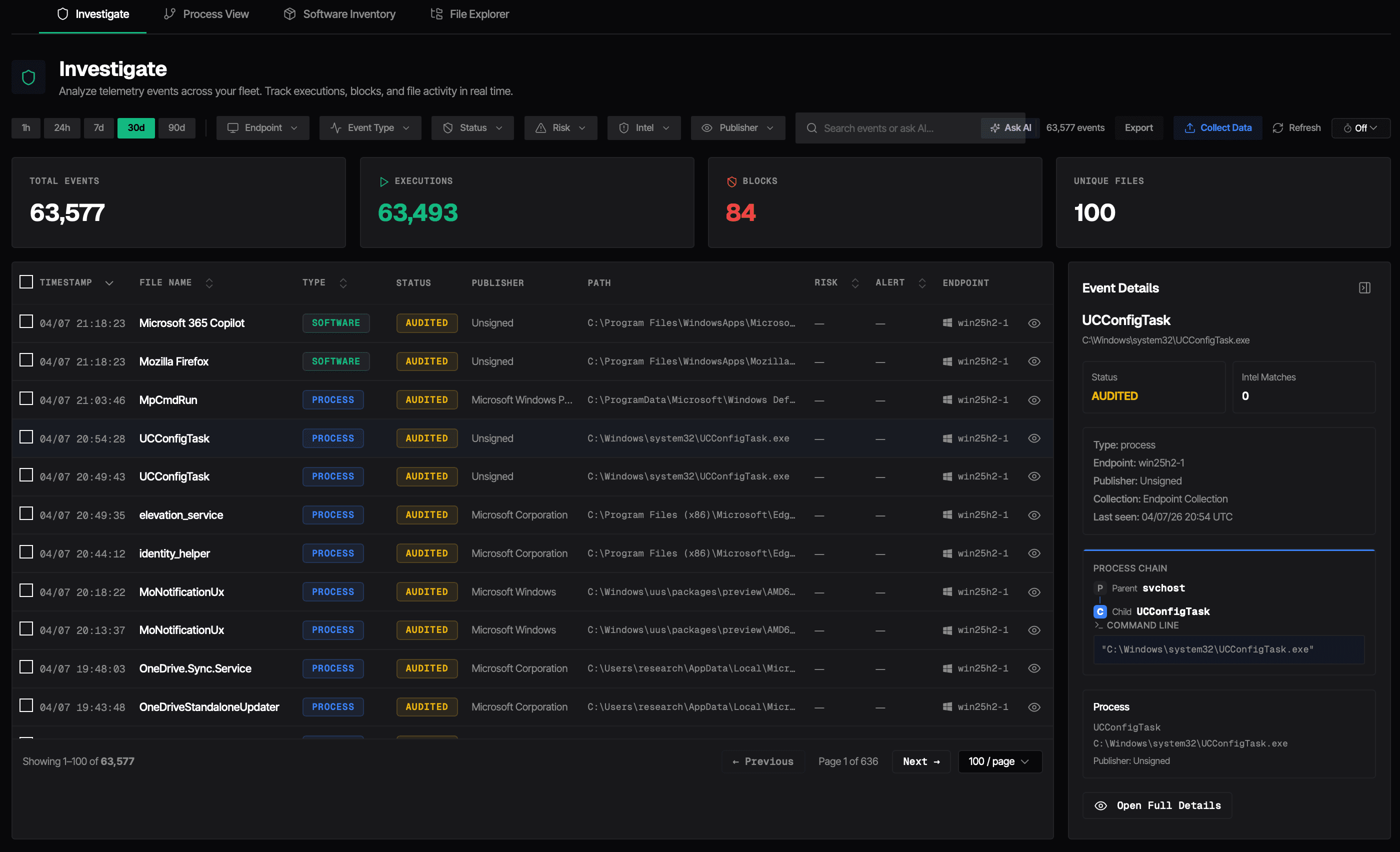
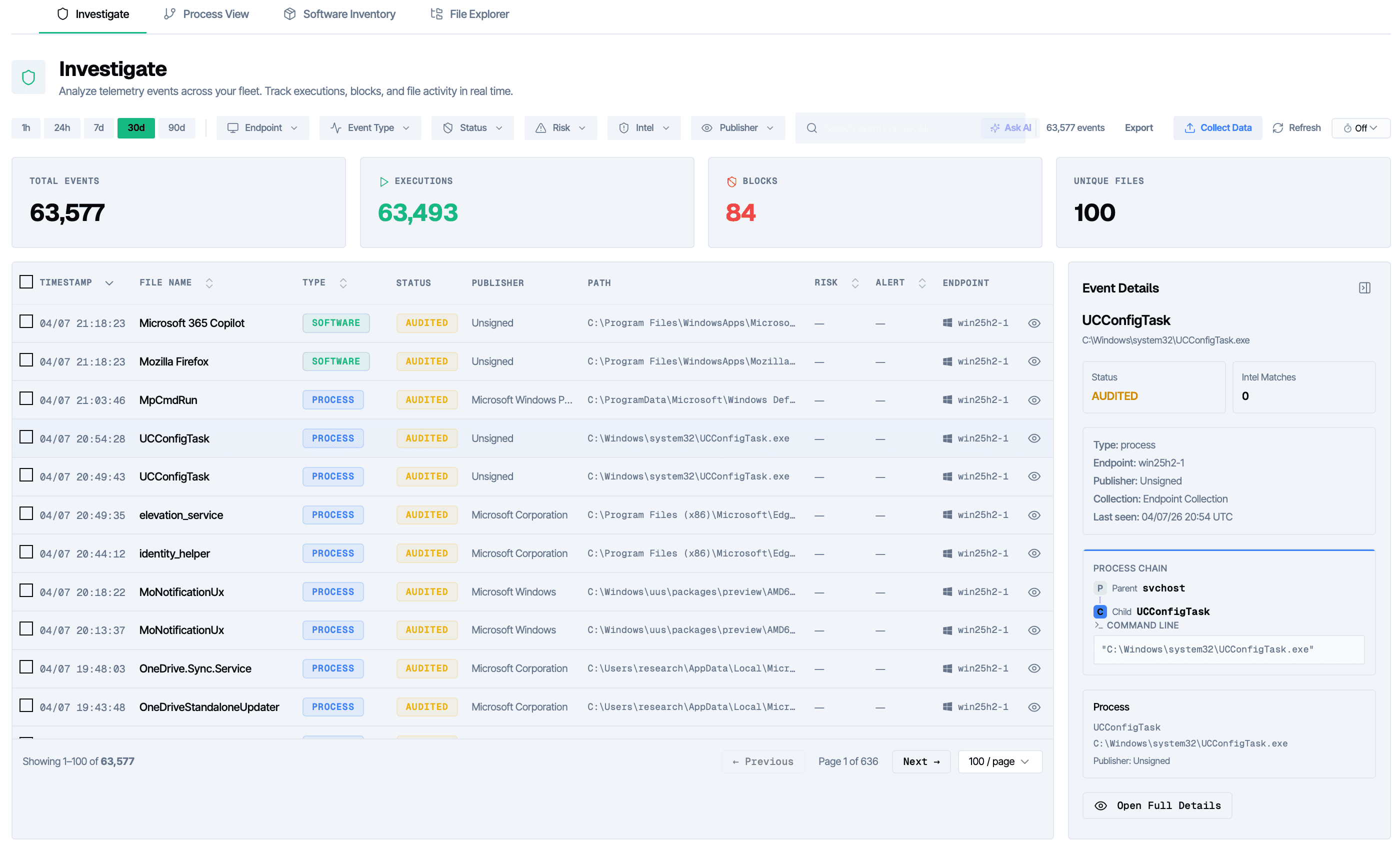
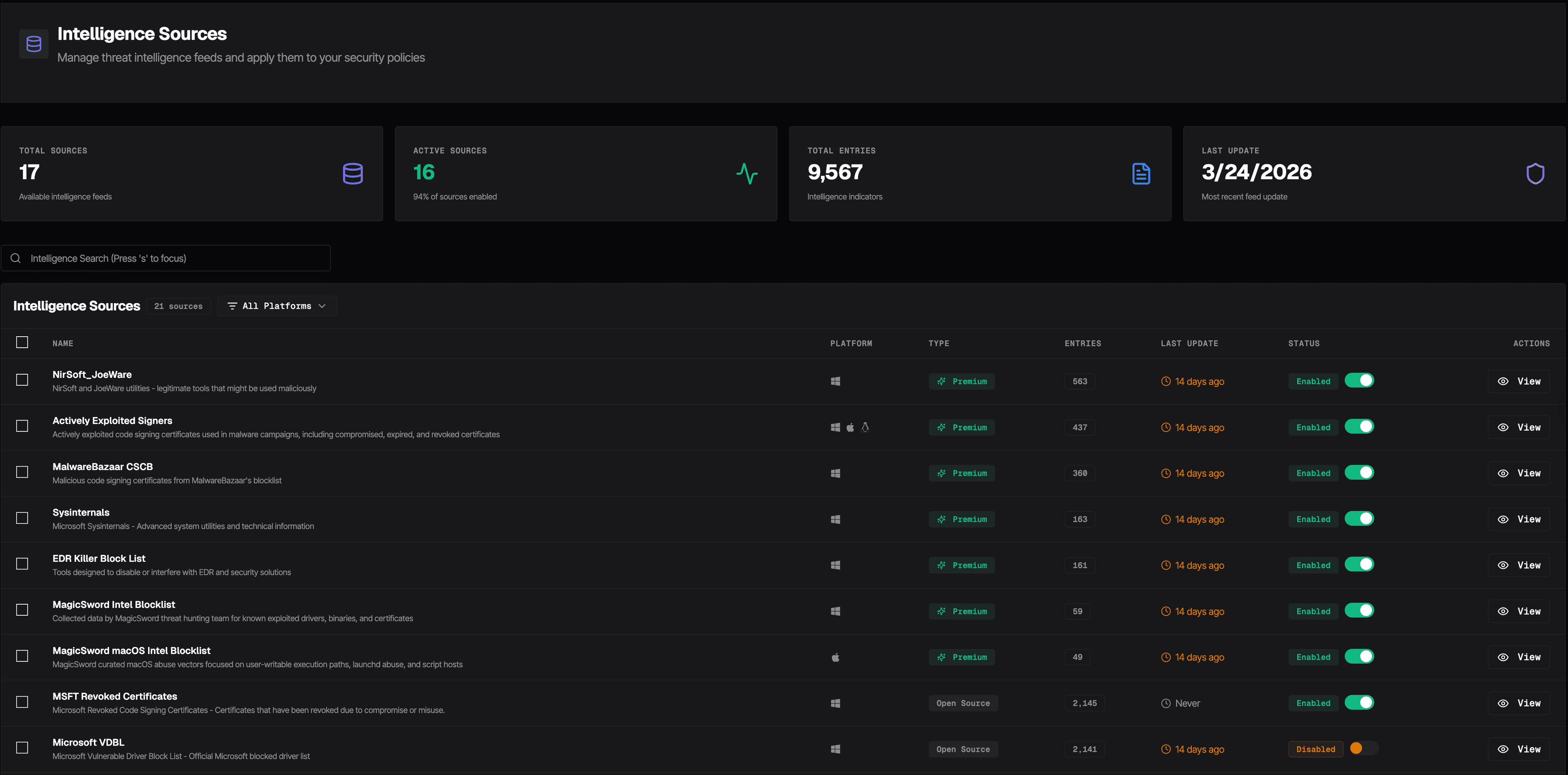
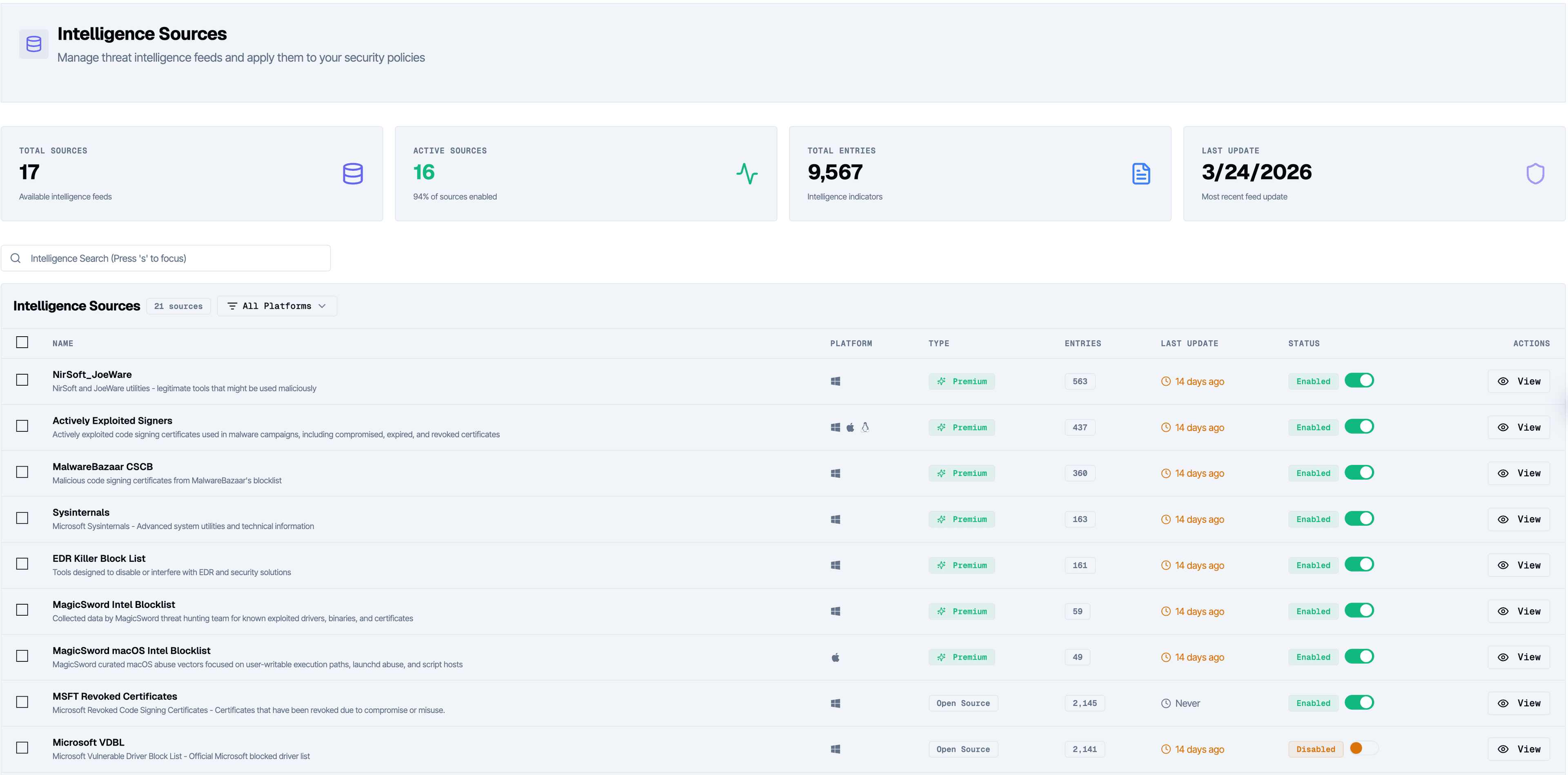
MagicSword focuses on preventing attackers from abusing legitimate tools commonly used in today's malware-free cyber attacks. Instead of relying primarily on large allowlists or privilege elevation policies, MagicSword applies threat-driven application control informed by real attack techniques observed in security incidents and threat research.
Today's attacks frequently rely on legitimate administrative tools already allowed in enterprise environments — scripting engines, system utilities, and remote management software. Because these tools are typically permitted to run as part of normal operations, attackers can often execute them without needing elevated privileges.
MagicSword Enables
- →Restrict execution of commonly abused administrative tools
- →Prevent misuse of remote management and scripting utilities
- →Block vulnerable drivers frequently used to bypass security controls
- →Reduce lateral movement techniques used in ransomware attacks
Prevention-first security — reducing the attack surface while maintaining normal system operations, without requiring constant privilege management or policy escalation.
Comparison
Key Differences
| Capability | BeyondTrust | MagicSword |
|---|---|---|
| Primary focus | Endpoint privilege management | Threat-driven application control |
| Security model | Least privilege enforcement | Prevention-first execution control |
| Main risk addressed | Excessive administrator privileges | Abuse of legitimate tools |
| Policy approach | Allowlisting and privilege elevation | Threat-driven blocklisting |
| Operational focus | Managing privilege elevation workflows | Restricting attacker techniques |
| LOLBins / RMM abuse protection | Indirect protection | Direct execution restrictions |
Choosing the Right Approach
BeyondTrust and MagicSword address different parts of the attack lifecycle. BeyondTrust focuses on controlling privileges, while MagicSword focuses on controlling execution of attacker techniques.
For organizations evaluating a BeyondTrust competitor, the key question is not which platform blocks more actions, but which approach best reduces the risks most relevant to your environment — while maintaining operational efficiency and minimizing security overhead.
FAQ
Frequently Asked Questions
What is the difference between BeyondTrust and MagicSword?
BeyondTrust focuses on endpoint privilege management — removing admin rights and managing elevation. MagicSword focuses on threat-driven application control — restricting the tools and execution paths attackers actually abuse in breaches.
Can privilege management prevent Living-off-the-Land attacks?
Privilege management controls who can run applications with elevated privileges. However, attackers frequently use tools that are permitted to run within normal user contexts. Threat-driven application control directly restricts these execution paths regardless of privilege level.
Does MagicSword support allowlisting?
Yes. MagicSword supports both strict default-deny allowlisting and threat-driven blocklisting. Organizations can implement either model or a hybrid approach depending on their needs.
Related
See How MagicSword Compares
Threat-driven application control designed to stop today's attack techniques — without constant privilege management.